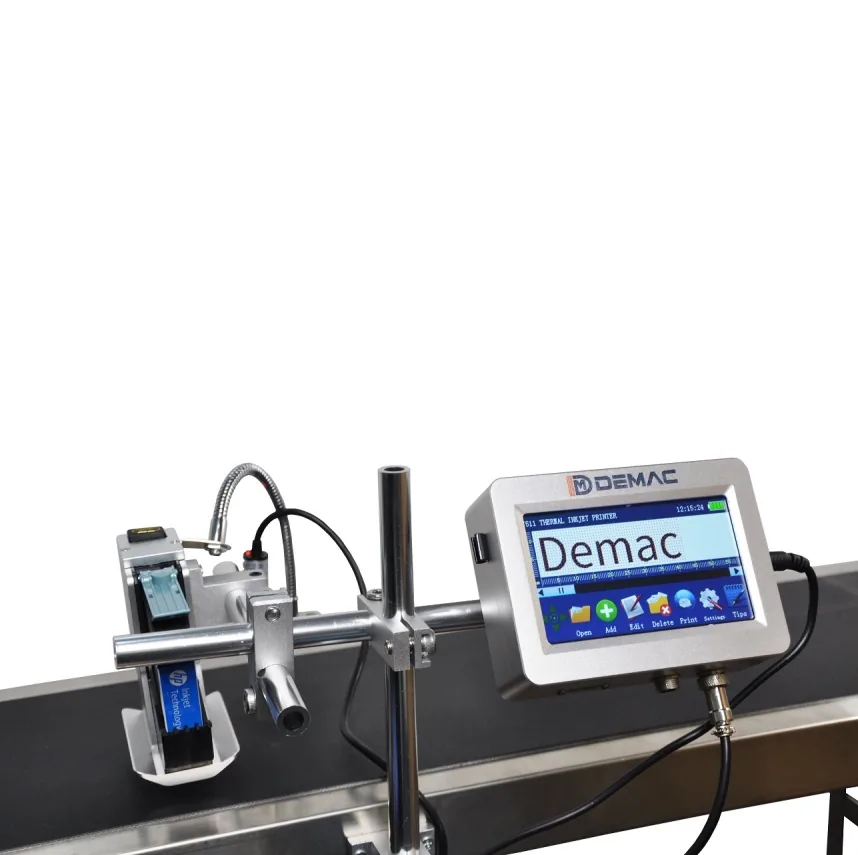
Verified coding-machine specifications
Published machine values for hot foil, J511 thermal inkjet and T30/T50 thermal transfer overprinting, translated into practical application checks.
Published values and what they do not prove
The values below are taken from the machine information supplied for this website. They define available capability; they do not replace a trial on the actual pack, complete message and production movement.
| Machine family | Published print capability | Published operating data | Application evidence still required |
|---|---|---|---|
| Hot foil coder | Single line 4 × 35 mm, about 15 characters; double line 8 × 35 mm, about 30 characters. Maximum ribbon width 35 mm. | Maximum 80–150 print cycles/min; 220 V, 50 Hz, 200 W. | Type layout, ribbon grade, temperature, pressure, dwell, pack presentation and code durability. |
| J511 thermal inkjet | 600 DPI; 1–8 adjustable lines; 1.0–12.7 mm print height; 2,000 characters per message. | Listed speed 70 m/min; 42 ml ink cartridge; 0–45°C and 40–60% humidity. | Ink/substrate compatibility, print distance, trigger timing, product stability, message density and machine-readable result. |
| T30 thermal transfer overprinter | 32 mm, 300 DPI printhead. 32 × 70 mm intermittent or 32 × 150 mm continuous print area. | Up to 200 prints/min intermittent or 350 prints/min continuous; continuous speed ≤40 m/min; 500 m ribbon; USB, RS232 and TCP/IP. | Host-machine print window, film/ribbon combination, web tracking, registration, ribbon economy and final-pack handling. |
| T50 thermal transfer overprinter | 53 mm, 300 DPI printhead. 53 × 70 mm intermittent or 53 × 150 mm continuous print area. | Up to 200 prints/min intermittent or 350 prints/min continuous; continuous speed ≤40 m/min; 600 m ribbon; USB, RS232 and TCP/IP. | As for T30, plus proof that the wider message remains inside the available web and approved code area. |
Hot foil and J511 thermal inkjet reference
Use the published values to prepare the trial rather than treating one headline number as a production guarantee.
Hot foil coder
| Speed | Maximum 80–150 times/min |
|---|---|
| Print area | 4 × 35 mm single line; 8 × 35 mm double line |
| Ribbon | Maximum width 35 mm |
| Electrical | 220 V, 50 Hz, 200 W |
| Published materials | Plastic, leather, cloth and paper |
Final material suitability depends on the actual ribbon, temperature, dwell, pressure and pack presentation.
J511 thermal inkjet
| Resolution | 600 DPI |
|---|---|
| Layout | 1–8 lines; 1.0–12.7 mm print height |
| Listed speed | 70 m/min |
| Ink | Quick-dry eco, water-based and oil-based options |
| Data | USB flash database and external real-time data support |
| Environment | 0–45°C; 40–60% humidity |
Final ink, protocol and line-speed suitability must be confirmed for the proposed installation.
T30 and T50 thermal transfer reference
Both printer formats are listed for intermittent and continuous operation. The print width and available message area should be matched to the artwork before integration is designed.
| Item | T30 | T50 | Acceptance check |
|---|---|---|---|
| Printhead | 32 mm, 300 DPI | 53 mm, 300 DPI | Print the complete largest job at the approved size. |
| Intermittent area | 32 × 70 mm | 53 × 70 mm | Confirm the host machine provides the stationary print window. |
| Continuous area | 32 × 150 mm | 53 × 150 mm | Verify web speed, encoder information and registration through speed changes. |
| Print frequency | ≤200/min intermittent; ≤350/min continuous | ≤200/min intermittent; ≤350/min continuous | Test with the real pitch, message density and host-machine cycle. |
| Ribbon | 22–33 mm wide; maximum 500 m | 35–55 mm wide; maximum 600 m | Approve the ribbon with the actual film, downstream contact and storage exposure. |
| Interfaces | USB, RS232, TCP/IP | USB, RS232, TCP/IP | Define protocol, field ownership, update timing and failure response. |
| Utilities | AC 110–240 V, 50/60 Hz, 200 W; 0.35–0.6 MPa dry clean air; 0–40°C and 10–90% RH non-condensing | Confirm local utilities and environment at the installation position. | |
Questions to answer before comparing models
Why does listed speed not automatically equal line output?
Listed printer speed or frequency describes one capability boundary. Practical line output also depends on pack pitch, message size, print density, trigger timing, acceleration, dwell or web speed, product stability and the time needed for inspection or reject handling.
How should print area be approved?
Print the complete worst-case job at its intended size, including variable fields, barcode quiet zones and the planned code position. Check it on the finished pack after forming, sealing, handling and any contact with guides or belts.
Which environmental values matter?
Use the published temperature and humidity limits as a boundary, then inspect the local coding point for heat, cold, condensation, washdown, dust, oil, product splash and restricted airflow. The environment at the printhead may differ from the wider room.
Which settings belong in the handover record?
Retain the approved consumable, message file, print position, delays, speed or encoder parameters, printhead settings, host-machine interface, verification limits, reject response and first-off approval method.
Validate the published data on the production pack
Send the substrate, complete message, normal and maximum operating condition, print position and verification requirement.