Thermal transfer overprinter for premium flexible film coding
TTO printer

Thermal transfer overprinter for premium flexible film coding

T30 and T50 thermal transfer overprinters for high-quality dates, logos, barcodes, QR codes, nutrition tables and traceability data.

High-resolution TTO coding for packaging films

Thermal transfer overprinters are the premium print-quality option in this range. They use a robust glass-encapsulated printhead and software control to create consistent variable data prints.

  • Intermittent and continuous operation in one platform.
  • Excellent quality print for product presentation and traceability.
  • Print real-time data, barcodes, QR codes, logos, pictures, dates and nutrition tables.
  • Ribbon-saving functions and optimised ribbon usage with 0.1mm gap between prints.
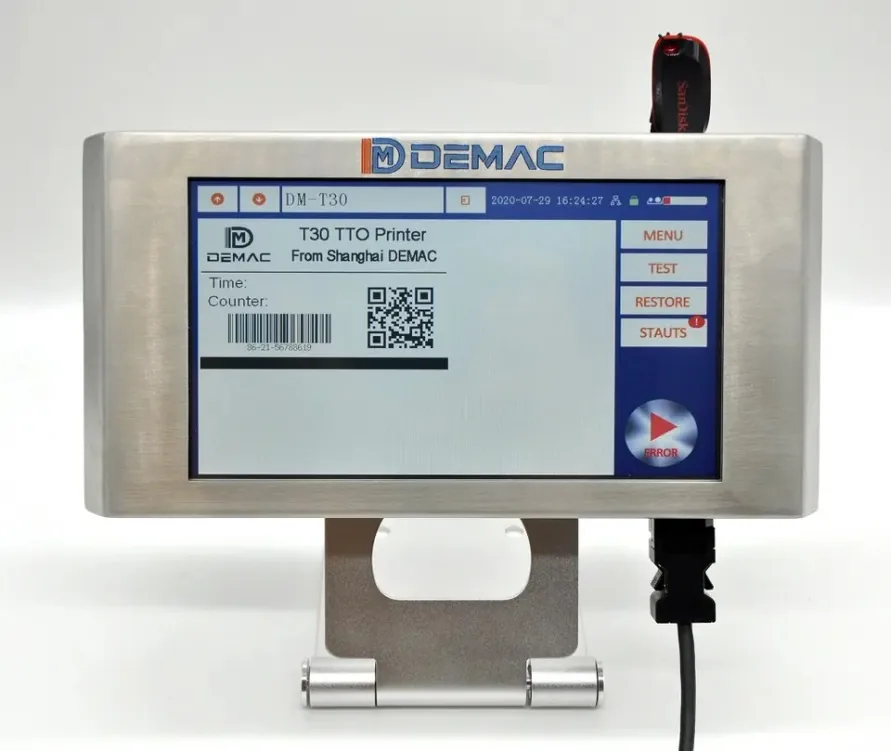
  • Dockable 7-inch LCD handheld touch pad and designer program included.
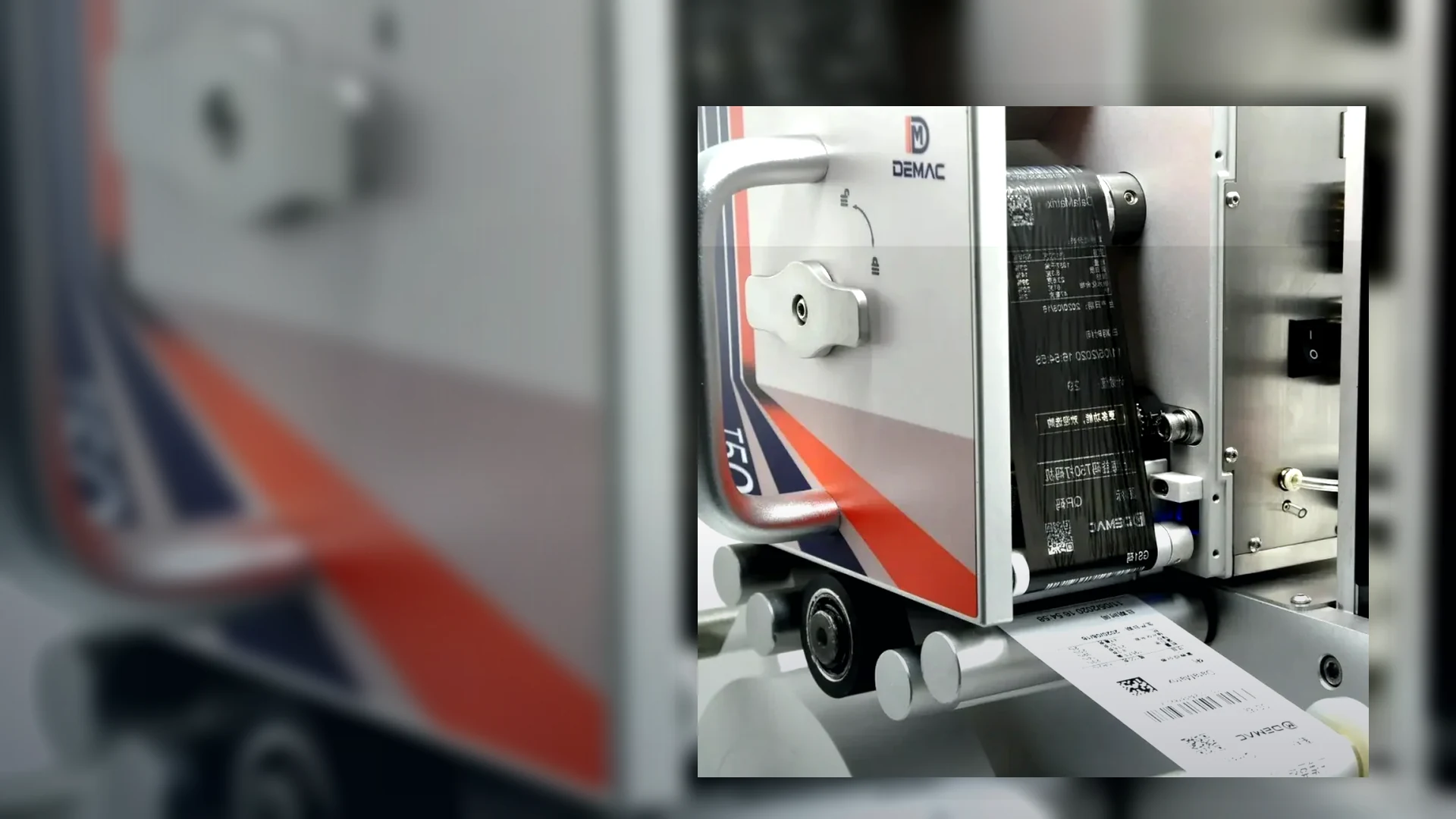
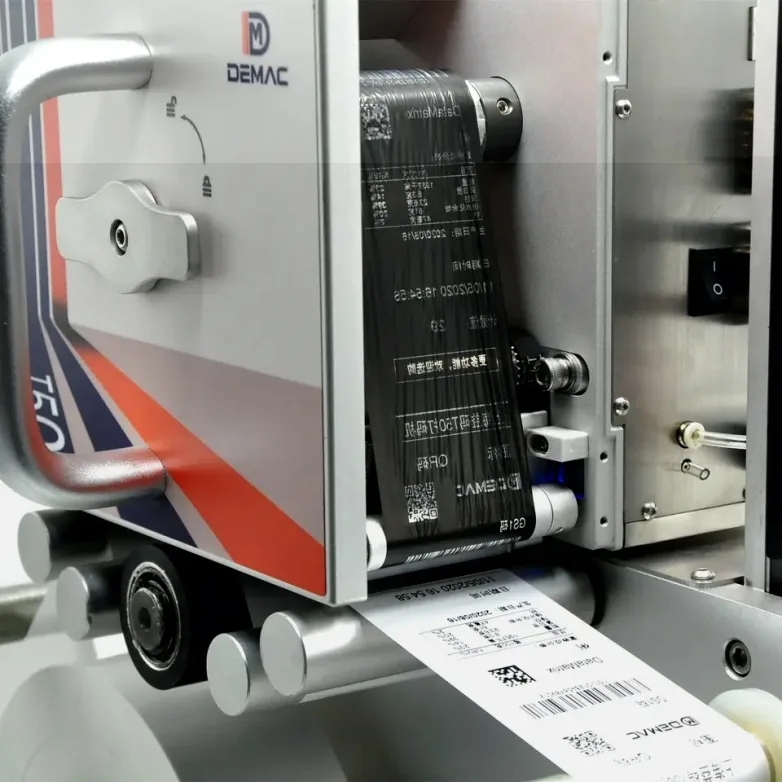
Thermal transfer overprinter printing onto packaging film

TTO systems are often selected for flexible packaging film and high-quality variable data.

T30 and T50 specification comparison

Specification data for intermittent and continuous thermal transfer overprinting.

SpecificationT30 IntermittentT30 ContinuousT50 IntermittentT50 Continuous
Print head32mm, 300dpi (12 points/mm)53mm, 300dpi (12 points/mm)
Print area32mm × 70mm32mm × 150mm53mm × 70mm53mm × 150mm
Print speedAt fixed speed≤40 m/minAt fixed speed≤40 m/min
Print frequency≤200 times/min≤350 times/min≤200 times/min≤350 times/min
Ribbon width22mm-33mm35mm-55mm
Max ribbon length500m600m
COM interfaceUSB, RS232, TCP/IP
Power supplyAV110-240V 50/60Hz, 200W
Air supply0.35-0.6MPa, dry and clean
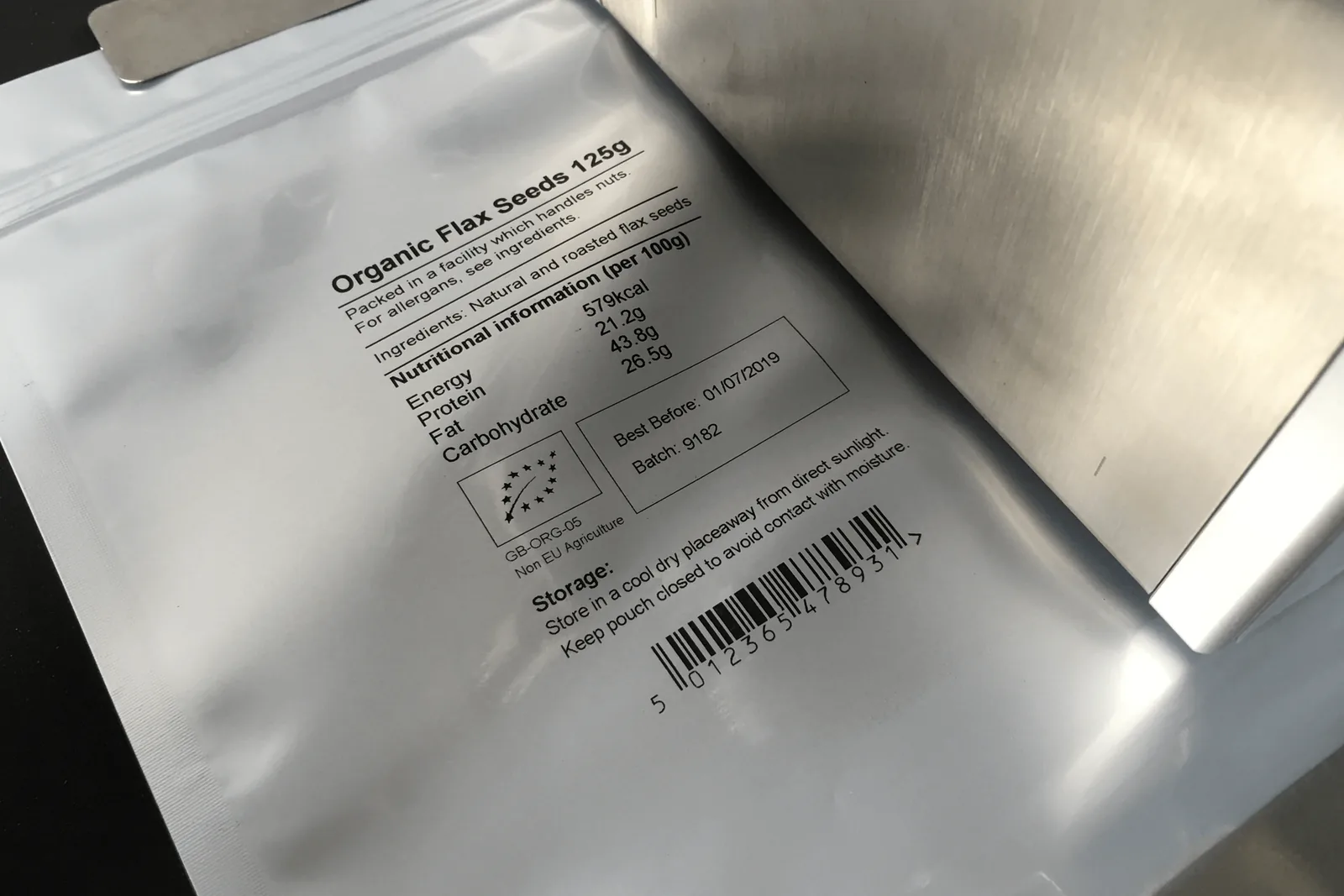
Printed thermal overprinter sample on packaging film

Example of dense variable data print produced with a thermal overprinter.

Why choose thermal transfer overprinting?

TTO is well suited to packaging where brand presentation, traceability and readable variable data are all important. It can support GS1-mode barcodes, QR codes, DataMatrix and complex print jobs.

300dpihigh-resolution printheads
150mmcontinuous print length option
6 unitsPC interface can manage multiple printer units

Thermal transfer overprinter FAQs

What is a thermal transfer overprinter best for?

A TTO printer is best for high-quality variable data on flexible packaging films, VFFS packs, pouches and flow-wrapped products.

What models are included?

The range described includes T30 and T50 thermal transfer overprinter models with intermittent and continuous modes.

What can it print?

It can print real-time clock, dates, user-entered alphanumeric data, automatic shift codes, serial numbers, logos, barcodes, QR codes and nutrition tables.

Specify TTO around film movement, print width and data

Thermal transfer overprinting can produce dense, high-quality variable information on flexible packaging, but the printhead motion and ribbon must match the host machine and film.

In intermittent mode, the packaging web stops while the printhead traverses the print area. In continuous mode, the web keeps moving and the printer synchronises the print with that movement. The correct mode is therefore determined by the host machine, not simply by a preference for a faster specification.

The T30 uses a 32 mm, 300 DPI printhead, while the T50 uses a 53 mm, 300 DPI printhead. Both list a 70 mm print length in intermittent mode and 150 mm in continuous mode. The wider head is useful only when the production layout needs it; a larger print area can also increase ribbon use and message-design complexity.

Print frequency is listed at up to 200 cycles per minute intermittently and up to 350 per minute continuously. These are model limits under suitable conditions, not guaranteed pack outputs. The final rate depends on the code length, host-machine cycle, acceleration, web speed, communications and the time available for the printhead and ribbon mechanism.

Ribbon must be approved with the actual film. Flexible materials differ in coating, treatment, slip additives and heat response. The correct combination should transfer cleanly, resist expected rub and remain readable after forming, sealing and downstream handling. The stated ribbon-saving functions and 0.1 mm inter-print gap can reduce waste, but the real consumption should be measured from the approved message and pitch.

The supplied interfaces are USB, RS232 and TCP/IP. Those connections make several integration routes possible, but they do not define the final ERP, MES or database protocol. The project must specify data ownership, field mapping, message download, job recall, access control, connection-loss behaviour and how the correct code is confirmed at start-up.

The published environment is 0–40°C and 10–90% relative humidity without condensation, with 0.35–0.6 MPa dry, clean air. Local conditions at the printer should be checked rather than relying on the general room temperature. Heat from sealing equipment, dust, condensation and poor air quality can affect reliability.
T30 and T50 model data for commissioning

These verified values should be carried into the final machine specification and acceptance test.

ItemT30T50Commissioning implication
Printhead32 mm, 300 DPI53 mm, 300 DPIApprove the complete artwork at the chosen width and smallest character size.
Print area32 × 70 mm intermittent; 32 × 150 mm continuous53 × 70 mm intermittent; 53 × 150 mm continuousCheck orientation, host-machine print window and the web area available before sealing or cutting.
Print frequencyUp to 200/min intermittent; 350/min continuousUp to 200/min intermittent; 350/min continuousValidate with the full message and the real host-machine cycle.
Ribbon22–33 mm wide; maximum 500 m35–55 mm wide; maximum 600 mSelect ribbon chemistry and width around the film and message, then record actual yield.
InterfacesUSB, RS232, TCP/IPUSB, RS232, TCP/IPDocument protocol, field mapping, ownership and connection-loss response.
Environment0–40°C; 10–90% RH, non-condensing; 0.35–0.6 MPa dry, clean airCheck conditions at the printer and specify filtration, drainage and maintenance access.
Supported print contentDates, time, shift codes, serial numbers, logos, barcodes, QR codes, DataMatrix, PDF417 and nutrition tables, subject to software and layout.Test the largest production job and verify every machine-readable symbol using the agreed method.

Synchronise TTO with the packaging machine

The supplied footage shows coding equipment integrated with packaging machinery. Final commissioning should test start, stop, speed changes, film registration, job changes and fault recovery.

  • Confirm the print-start signal and the available intermittent or continuous print window.
  • Check encoder or web-speed information where the host speed can vary.
  • Prove that the code remains in position relative to the cut, seal and artwork registration.
  • Define how the line responds to ribbon end, printer fault, missed print or failed verification.
T30 or T50 thermal transfer overprinter installed above packaging filmThermal transfer printer controller used to select variable coding jobsThermal transfer print sample containing text, barcode and traceability data

TTO trial and acceptance checklist

Approve the printer as part of the host packaging machine, not as a bench-top sample alone.

Film and ribbon

Record the exact film construction, treated print side, ribbon reference, print energy, speed and expected contact after coding.

Message and data

Run the largest job, all variable fields and every barcode or 2D-code type. Confirm job recall, date logic and external-data behaviour.

Machine cycle

Test normal and maximum rate, start/stop, film splice, registration changes, ribbon change, fault recovery and rejected or held product.

Further TTO questions

What is the main difference between the T30 and T50?

The T30 uses a 32 mm printhead and the T50 a 53 mm printhead. The wider T50 supports a broader print layout, while both are listed at 300 DPI and offer intermittent and continuous variants.

How do intermittent and continuous TTO modes differ?

Intermittent printing takes place while the web is stationary. Continuous printing synchronises the print with moving film. The host packaging machine determines which motion is available.

Why is dry, clean compressed air specified?

The stated air requirement is 0.35–0.6 MPa, dry and clean. Moisture, oil or contamination in the air supply can affect pneumatic components and reliability.

What determines ribbon adhesion and durability?

Film surface, ribbon chemistry, print energy, speed, pressure, storage and downstream rub or heat all matter. Approve the exact production combination rather than relying only on film type.

How should TTO code position be verified on VFFS or flow-wrap film?

Check the mark relative to artwork registration, cut and seal positions over the full speed range and after starts, stops and film changes. A vision or registration check may be required where position is critical.

Check a T30 or T50 against your packaging film

Send the film reel specification, full artwork, host-machine details, speed, print window and data or verification requirement.

Request a TTO application review

Create a repeatable TTO job and commissioning record

TTO approval should identify exactly how the film, ribbon, message, host-machine motion and control signals produced the accepted code.

Start with the message file. Record the approved artwork, printer model, printhead width, orientation, variable fields, date rules, barcode or 2D-code data and software version used to create the job. The first-off sample should be linked to that controlled file so a later edit can be identified and reviewed.

Record the exact film and print side. Flexible packaging can vary by coating, treatment, slip additive and supplier. The ribbon reference, width, print energy or quality settings and web speed should be captured with the approval sample. A substitution that appears visually similar can change transfer, rub resistance or heat response.

Intermittent and continuous motion need different timing evidence. Intermittent approval should show the available stationary print window and printhead travel. Continuous approval should show how the printer follows web movement. In both cases, test registration relative to artwork, cut and seal positions through starts, stops and speed changes.

The T30 and T50 list USB, RS232 and TCP/IP interfaces. Treat those as connection options rather than a complete ERP or MES solution. The commissioning record should define the protocol, data owner, field mapping, job-download method, printer-ready and fault states, connection-loss response and operator recovery sequence.

Machine-readable codes need a defined verification method. Record symbol type, data structure, size, quiet zone, contrast and the scanner or verifier used for acceptance. If an inspection system is included, challenge it with known good, poor, wrong and missing codes and prove the associated stop or reject action.

Minimum TTO production record

The record should be detailed enough for another trained operator or engineer to reproduce the approved result.

Record groupInformation to retainReason
Printer and jobT30 or T50 model, intermittent or continuous mode, printhead width, job file, software version and user access level.Prevents an unrecorded model, mode or message change from being treated as the same approved process.
Film and ribbonFilm reference and print side, supplier or construction identifier, ribbon reference and width, approved settings and environmental conditions.Allows adhesion, transfer and rub performance to be traced to the tested material combination.
Host-machine timingNormal and maximum web speed, print-start signal, encoder or speed information, registration reference and fault interlocks.Connects print position and completion to the real packaging cycle.
Code verificationFirst-off sample, inspection method, barcode or 2D-code check, in-process frequency, reject or stop challenge and reject confirmation where used.Shows how production identifies both an incorrect message and an unreadable or missing mark.
Change and recoveryRibbon replacement, film splice, job change, power loss, communications loss, printer fault and restart checks.Proves that the correct job and product status are restored after common interruptions.

Film coding route

Use the flexible film and pouch coding page to confirm where the print occurs relative to forming, filling, sealing and cutting.

Use the print-quality guide for adhesion, rub, contrast and machine-readable code checks.

Controls evidence

Use the integration guide for triggers, data ownership, fault states, vision and reject handling.

Review the film, job file and host-machine cycle together

Send production film, the complete print layout, packaging-machine motion, target rate and any external-data or verification requirement.

Review a TTO application

TTO evidence required before production release

Film and ribbon: retain the exact film construction, supplier, print side, background, ribbon grade and roll orientation used for the approved samples.

Job and artwork: protect the template, print area, variable fields, date rule, barcode or 2D-code data and user permissions.

Machine cycle: record intermittent dwell or continuous speed, trigger, encoder, acceleration, print pressure, web tension and restart behaviour.

Acceptance: test every critical format, largest message, speed range, ribbon change, job change, stop/start, missing-ready signal and inspection response.

Build the TTO quotation and acceptance scope together

The cost guide, URS checklist and FAT/SAT guide provide one controlled route from shortlist to handover.

Review a TTO project

Further questions about thermal transfer overprinting

TTO repeatability depends on controlled film movement, printhead contact, ribbon choice, registration and the host machine cycle.

How does film tension affect TTO print quality?

Thermal transfer overprinting needs the film to present a stable, supported surface during the print stroke. Variable tension can allow the web to move, wrinkle or change contact pressure, producing stretched, incomplete or misplaced print. The printer setting should therefore be assessed together with unwind, dancer, registration and sealing-machine behaviour.

Test normal running, reel changes, acceleration, deceleration and the smallest practical film tension. A good code on a stationary sample does not prove that the web path will remain stable in production.

What should be recorded when changing TTO ribbon grade?

A ribbon-grade change should record the supplier and grade, width, batch or traceable reference where available, print settings, film specification, treated side, message coverage and the test result after forming and downstream handling. This allows the new combination to be compared with the approved application rather than judged only by immediate appearance.

Do not assume that a visually similar ribbon is equivalent. Adhesion, heat requirement, edge definition, smudge resistance and printhead wear can change with the ribbon and substrate combination.

Why can a TTO code move even when the artwork has not changed?

A TTO code can move because the web register, print trigger, encoder or host-machine timing has changed, because the printhead mounting has shifted, or because film tracking and tension alter the physical relationship between the print window and the finished pack. The artwork file can remain correct while the mechanical reference moves.

Measure the code on the finished pack and relate it to registration marks, seals and cut positions. This separates a file-position issue from a web-control or mounting issue.

How should intermittent and continuous motion be challenged during acceptance?

Acceptance should reproduce the motion mode used in production and challenge the conditions that change timing: normal and maximum web speed, starts, stops, acceleration, registration corrections, reel changes and the largest approved message. Intermittent operation should prove the available stationary print window; continuous operation should prove stable synchronisation with moving film.

Record the host-machine recipe, printer job, ribbon, film and accepted code position so the result can be repeated after later changeovers or maintenance.

Prove TTO on the real film and packing cycle

Send the film reel sample, finished pack, artwork, motion mode, web-speed range and registration details.

Review a TTO application

Use the T30 and T50 data to define the host-machine trial

The T30 provides a 32 mm, 300 DPI printhead and the T50 a 53 mm, 300 DPI printhead. Published print areas are 70 mm long in intermittent mode and 150 mm in continuous mode, with model-width differences. The host machine must still provide the correct print window, web tracking, registration, signals and safe service access.

What should be proved in intermittent mode?

Measure the stationary period, web stability and acceleration before and after printing. Confirm the complete job fits within 32 × 70 mm for T30 or 53 × 70 mm for T50 and remains positioned relative to artwork, cut and seal features.

What should be proved in continuous mode?

Validate speed or encoder information, print registration, web tension, ribbon transfer and code position through starts, stops and speed changes. Published continuous areas are 32 × 150 mm for T30 and 53 × 150 mm for T50.

Review the T30/T50 specification reference, the film-coding footage and the film/ribbon trial guidance.

Contact us