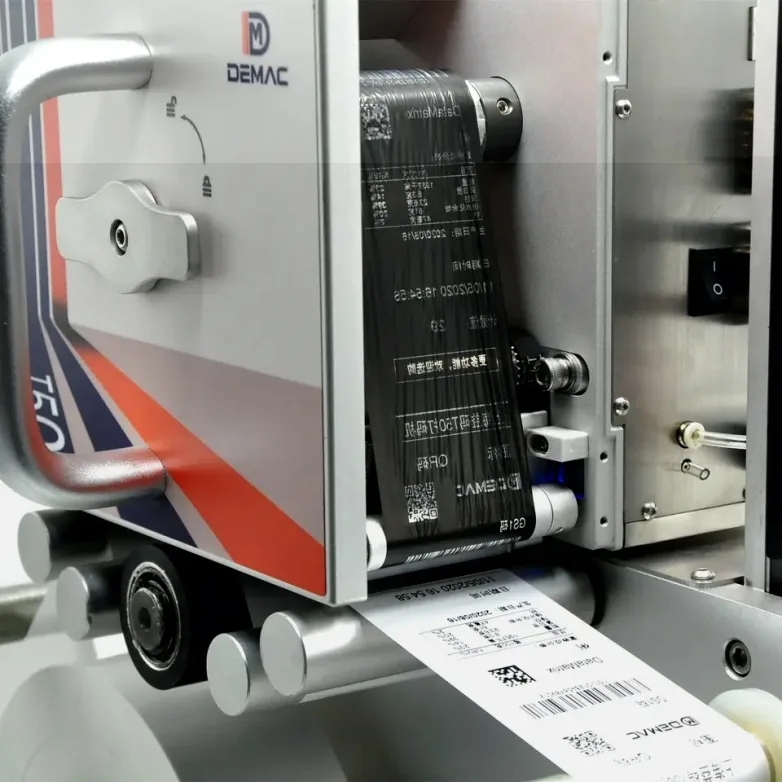
Film and pouch coding machines for flexible packaging
Thermal transfer overprinters are a strong route for high-quality coding on packaging film, bags, pouches, VFFS and flow-wrap machinery.
Application guidance for tto printers for vffs and pouches.
How to specify this coding application
Flexible packaging needs a different coding approach from rigid containers. The printer must work with moving film, intermittent or continuous machine motion, print registration, ribbon use and the available web area. Thermal transfer overprinting is widely used when print quality, barcodes, QR codes or traceability-rich information are required on film.
- Intermittent or continuous packaging machine motion
- Film material and ribbon suitability
- Print area width and length
- Pack speed, web speed and print frequency
- Need for barcode, QR code or logo printing
- Ribbon saving and operator changeover requirements
Recommended coding routes
Use these routes as a starting point before confirming samples, speed, substrate and integration details.
VFFS and intermittent machines
Intermittent TTO mode can print within a defined area during the packaging machine cycle.
Continuous film movement
Continuous TTO mode supports film movement where the printer must match web speed.
Traceability-rich packs
TTO can print dates, nutrition tables, logos, barcode, QR code and user-entered variable data.
Related coding machinery pages
These internal resources help buyers move from the application to the correct machine technology.
Thermal transfer overprinters
Continue to this related coding machinery page for deeper specification guidance.
TTO vs inkjet vs hot foil
Continue to this related coding machinery page for deeper specification guidance.
Contact Lancing
Continue to this related coding machinery page for deeper specification guidance.
TTO printers for VFFS and pouches FAQs
What is the best coder for pouches?
A thermal transfer overprinter is often the strongest choice for pouches and flexible films when high-quality date, batch, barcode or QR code printing is needed.
Can a TTO printer work on VFFS machines?
Yes. TTO printers are commonly specified for vertical form-fill-seal lines, with intermittent or continuous operation depending on the machine.
What print resolution is available?
The T30 and T50 thermal transfer overprinter options listed for this range use 300 dpi print heads.
Need help with tto printers for vffs and pouches?
Send your material, speed, code size and example data so Lancing can recommend the right coding route.
Code flexible packaging before the film becomes a finished pack
Film construction, web motion, registration, sealing and downstream contact all affect the coding result.
TTO is normally the first route to compare for high-quality variable information on flexible film. It transfers ribbon onto the web and can support text, dates, batch data, logos, barcodes, QR codes and other approved layouts. Hot foil can remain appropriate for short, simple marks where the host machine provides an intermittent print window.
Identify the exact side of the film to be printed and obtain the supplier’s material reference. Coating, corona treatment, slip additives and laminate structure can change ribbon adhesion and heat response. A sample from a different film family or from an untreated laboratory sheet is not enough for production approval.
The print position must be considered relative to artwork registration, the forming shoulder, seals and cutting. The code should not be stretched, folded, heated or hidden when the pouch or bag is formed. It must also avoid areas where food, powder, oil or product splash could contaminate the surface before printing.
Intermittent and continuous host machines require different printer motion. Confirm web speed, index length, stationary time, acceleration and print-start signal. Where registration marks control the pack length, the coding station should be checked after starts, stops, film splices and speed changes so the code remains within the approved window.
Ribbon use depends on print width, message length, gap and saving mode. Measure consumption using the complete production job. A nominal ribbon length does not indicate cost per pack until the message pitch and approved settings are known.
Acceptance should include visual quality, adhesion or rub exposure, code position and scanner or verifier results where machine-readable symbols are used. Test after the film has passed through the actual forming, sealing and handling route rather than only immediately at the printer.
Flexible-film coding checks
Film and ribbon
Record film supplier, laminate, treated side, ribbon reference, print energy and storage conditions.
Web and registration
Confirm intermittent or continuous movement, web speed, index, print window, eye-mark logic and code position relative to cut and seal.
Finished-pack result
Inspect the code after forming, filling, sealing and normal contact, and verify every required barcode or 2D code.
When another route may be better
The pack format and line architecture can make a different coding location more robust.
Pre-printed label
Use label coding or print-and-apply when the required data belongs on a label and direct film printing creates poor contrast or awkward access.
Carton or outer case
Move the variable data downstream when the primary pack cannot provide a stable or readable coding area and the traceability requirement allows it.
Specialist inkjet
Compare a specialist inkjet route where the film, product or line movement does not suit hot foil or TTO, subject to adhesion and dry-time testing.
Further film and pouch coding questions
Why is the film’s treated side important?
Surface treatment affects how ribbon or ink wets and adheres to the material. The print should be tested on the production side and exact film construction.
Can a TTO printer code both VFFS and flow-wrap film?
TTO is used with both machine types, but the intermittent or continuous motion, print window, mounting and web speed must match the host machine.
How is code position kept aligned with the pack artwork?
The printer uses the host-machine timing, registration or speed information. Position must be checked across speed changes, stops, starts and film changes.
What affects ribbon cost per pack?
Message width and length, print pitch, ribbon width, saving mode, inter-print gap and rejected or test prints all affect consumption.
Should the code be tested before or after the pouch is formed?
Both. The initial transfer is checked at the printer, but final approval should inspect the code after forming, filling, sealing and normal downstream handling.
Send the film reel and host-machine details
Use the T30 and T50 TTO page and substrate test guide to prepare the trial.
Choose the flexible-pack coding route from the web and finished pack
Film coding must work in two coordinate systems: the flat material inside the packaging machine and the finished pouch, sachet, stick pack, flow wrap or tray lid seen by the customer and inspection system.
Sachets and stick packs
Control registration, lanes, seals, notches and the mapping from web repeat to individual pack.
Trays and lidding film
Coordinate code position with sealing, cutting, cooling, condensation and final-pack visibility.
T30 and T50 overprinting
Review print width, intermittent or continuous mode, ribbon, host-machine cycle and access.
Film print-quality testing
Approve the actual construction, print side, background, message, handling and storage exposure.
Direct coding versus labels
Compare inline web coding with preprinted or variable labels where the information area or process changes.
FAT and SAT for film lines
Test format change, largest job, speed range, stops, restarts, ribbon change and inspection faults.
Send the film, finished pack and packaging-machine cycle
Use production reels and full artwork so Lancing can map the print window to the final pack and acceptance test.