Best before date printers for packaging lines
Print clear best-before dates on labels, cartons, bottles, films, pouches and bags without slowing the packaging line.
Application guidance for best before date coding uk.
How to specify this coding application
Best-before date coding needs to be legible, repeatable and easy for operators to update. The right printer depends on whether the code is applied to a label, carton, bottle, flexible film or pouch, and whether the pack is moving continuously or indexed intermittently. Lancing can help compare thermal inkjet, thermal transfer overprinting and hot foil options around the material, code size and line speed.
- Best-before, production date and time code formats
- Label, carton, bottle, bag, film and pouch substrates
- Operator message changeover and date roll-forward process
- Print contrast, dry time and scuff resistance
- Integration with intermittent or continuous packaging machinery
- Batch or lot number printed alongside the date
Recommended coding routes
Use these routes as a starting point before confirming samples, speed, substrate and integration details.
Labels and cartons
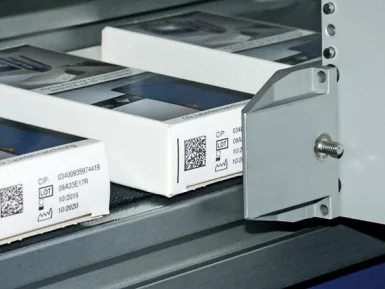
Thermal inkjet is a flexible route where sharp variable dates, lot numbers, barcodes or QR codes are needed on cartons and labels.
Flexible film and pouches
TTO printers are normally stronger for high-resolution date coding on packaging films, VFFS lines and flow-wrapper applications.
Simple date marks
Hot foil remains useful where the code is short, the pack indexes and a compact low-cost marking method is required.
Related coding machinery pages
These pages help connect the application to the most suitable coding technology and support route.
Best before date coding UK FAQs
What is the best machine for best-before date printing?
For cartons and labels, thermal inkjet is often suitable. For flexible film, pouches and flow-wrap, a thermal transfer overprinter is usually the stronger option.
Can best-before and batch number be printed together?
Yes. Thermal inkjet and TTO systems can print best-before dates together with batch, lot, time, serial, barcode or QR code data.
Can a coder work on an existing line?
Often yes, but the mounting position, trigger, encoder, pack presentation and available coding window must be checked first.
What should I send for a quote?
Send a sample pack or photo, material, required code, line speed, print area and whether the pack is indexed or moving continuously.
Need help with best before date coding uk?
Send your material, speed, code size and example data so Lancing can recommend the right coding route.
Control the best-before rule through job change and day boundary
A printer can reproduce a date accurately only after the business rule is defined. Record the source date, shelf-life calculation, display format, time-zone or shift boundary, authorised override and the evidence operators use to approve the first pack.
Which system calculates the date?
Identify whether the value is calculated in the printer, entered by an operator, received from a PLC, or supplied by an ERP/MES or database. Define behaviour if the source is unavailable or the received value is outside the expected range.
How is the changeover proved?
Clear the previous job, load the new message, verify product and pack format, print a first-off sample and retain the approval record. Include the first run after a day, shift or clock change.
The coding data ownership guide and multi-SKU changeover guide provide the linked controls sequence.