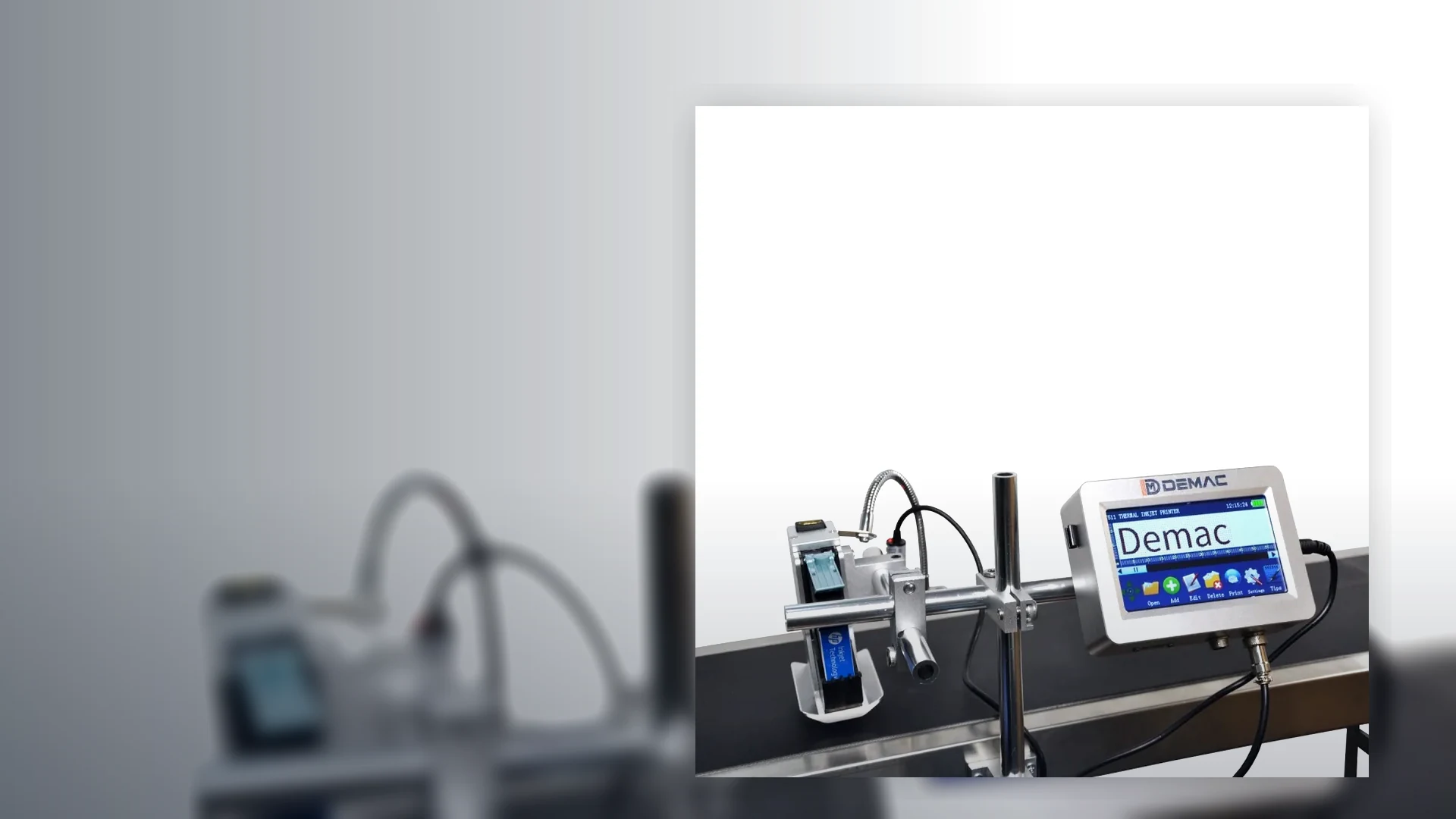
Coding outer cases and shipping cartons
Outer cases may need product identity, batch, date, quantity, destination and machine-readable logistics data. The decision between direct case printing and a variable label depends on carton surface, information area, customer format and line tracking.
Define the logistics data and customer requirement first
Case coding can be a simple batch mark or a controlled logistics-identification process. Confirm the required barcode, human-readable text, product and batch data, case quantity, customer label format and scan point before selecting hardware.
| Route | Best fit | Checks |
|---|---|---|
| Direct high-resolution case printing | Text, logos and machine-readable content printed directly onto a suitable corrugated or board surface. | Surface porosity, colour, flute and liner quality, print area, case squareness, head gap, conveyor movement, ink and verification. |
| Small-character direct coding | Compact date, batch or product marks on a controlled case area. | Message size, contrast, print distance, product pitch, surface variation and whether the code is large enough for the intended scan distance. |
| Print-and-apply label | Larger variable labels, high-quality barcodes, shipping addresses and customer-specific formats on cases or pallets. | Label stock, adhesive, print engine, application face, case position, label presence, scanner or vision check and roll change. |
Case presentation and tracking are part of the coding system
Square and separate the case
Control side-wall position, skew, flap condition and gap so the printhead or applicator meets a repeatable face.
Associate the right data
Use a controlled job, scanner, PLC or database link to connect product, batch and customer data to the correct case at the coding point.
Confirm the result
Check direct print or label presence, position and decoded data as required, then track any failed case to reject, hold or line stop.
Plan GS1 data and barcode quality on the final case
GS1 UK identifies several barcode routes for traded units depending on the product and data. For example, GS1-128 can carry attributes such as batch or expiry data, while ITF-14 can be relevant to direct printing on corrugated material.
- Obtain the current customer or sector barcode specification before designing the print.
- Reserve the correct symbol size, quiet zones and placement in the case artwork.
- Use the final liner, colour, print background and case construction for approval.
- Test after case erection, sealing, compression, conveying and handling.
- Verify the final symbol using the required method rather than relying only on a handheld scan.
Authoritative barcode guidance
Review GS1 UK's guidance for cases and traded units and the receiving customer's specification. The coding machine should implement an agreed symbol, not decide the supply-chain data model.
The GS1 2D coding guide covers DataMatrix and QR Code with GS1 Digital Link where those symbols form part of the project.
Direct print or variable label?
Information area
Large address, handling and logistics content may favour a label; compact codes may suit direct print.
Carton variation
Different liner colours, recycled content, dust and surface texture affect direct-print contrast and consistency.
Customer formats
Retailer or distributor label layouts can make print-and-apply the more controlled route.
Operating process
Compare ink, labels, backing waste, roll change, cleaning, rework, verification and maintenance.
Case-coding enquiry and acceptance checklist
Provide each case size, weight, liner colour, print face and construction, plus flat and erected samples. Include recycled or supplier variants that may alter print quality.
Supply the complete label or direct-print artwork, data definitions, barcode specification, customer format and the source of product, batch, quantity and destination fields.
Describe the case path from erector or packer through sealer, coder, inspection, reject and palletising. Include conveyor height, speed, pitch, guides and available straight length.
At acceptance, run all important cases and data jobs, challenge missing print or label, wrong data, unreadable barcode, case gaps, line stop and restart. Confirm the affected case is contained.
Outer-case coding FAQs
Can a barcode be printed directly onto corrugated cases?
Yes, with a suitable direct-print technology and carton surface. Barcode type, size, contrast, print quality and customer requirements must be confirmed and verified on the final case.
When is print-and-apply better than direct case coding?
A label is often considered when a large variable information area, high-quality logistics barcode, customer-specific format or controlled white background is required. The label adhesive and application face still need testing.
Which GS1 barcode is used on outer cases?
The choice depends on whether the case is a traded unit, the data required and the receiving system. GS1 UK notes that EAN-13, UPC-A, ITF-14 and GS1-128 can be used in different case applications; confirm the current specification for the customer and product.
How is the correct case linked to the correct code?
Use controlled product identification, line tracking and job data from the packing process. The design should prevent data from one SKU or batch being applied to another case during changeover or accumulation.
What should be tested at FAT or SAT?
Test each case size and surface, the full label or direct-print message, normal and maximum movement, product gaps, data changes, barcode checks, missing print or label, reject or stop response and restart recovery.
Compare direct case print and print-and-apply on one controlled brief
Send the cases, data and barcode specification, full artwork and conveyor layout so Lancing can identify the correct specialist route.