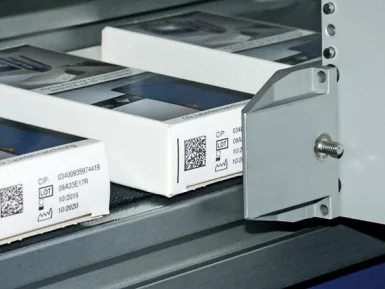
Food and drink date coding machines
Specify coding machines for food and drink packs where dates, batch marks and traceability data must be clear and consistent.
Application guidance for food packaging coding.
How to specify this coding application
Food and drink packaging often requires best-before, use-by, production and batch information to be printed clearly on labels, cartons, films, bags or pouches. The coding system has to match line speed, pack format, cleaning regime and operator changeovers.
- Best-before, use-by and batch code messages
- Film, pouch, bag, carton, bottle and label applications
- Daily date changes and SKU changeover control
- Ink or ribbon suitability for food packaging materials
- Legibility checks for retail and quality inspection
- Integration with labelling, sealing and VFFS equipment
Recommended coding routes
Use these routes as a starting point before confirming samples, speed, substrate and integration details.
Cartons and labels
Thermal inkjet suits many carton and label applications for dates and batch numbers.
Film and pouch packs
TTO is usually strong for high-quality print on flexible food packaging films.
Simple short codes
Hot foil can suit low-cost date marks on compatible intermittent machines.
Related coding machinery pages
These pages help connect the application to the most suitable coding technology and support route.
Food packaging coding FAQs
Which coder is best for food packaging film?
Thermal transfer overprinting is commonly used for flexible food packaging films, VFFS lines and flow-wrap material.
Can the same coder print best-before and batch code?
Yes, digital systems can print date and batch data together in one message.
Can barcodes or QR codes be printed for food traceability?
Yes, but code size, contrast and scan quality must be validated on the actual pack.
What should food producers send for advice?
Send samples or photos, material, line speed, code content, print position and cleaning requirements.
Need help with food packaging coding?
Send your material, speed, code size and example data so Lancing can recommend the right coding route.
Control date coding at line clearance and product change
Food and drink coding projects should connect the approved date rule to the correct product, packaging material and production job, then prove the code remains readable after filling, sealing, chilling, condensation, handling and secondary packing where those conditions apply.
Trial the finished-pack condition
Use the actual label, film, carton, bottle, jar, lid or tray and reproduce the temperature, moisture, oil, product contact and downstream handling that can affect the mark.
Challenge product and date changeovers
Test job selection, date calculation, first-off approval, old-material clearance, inspection, reject or hold response and recovery after a stop or lost data connection.
The application evidence checklist explains what to retain when the trial succeeds.