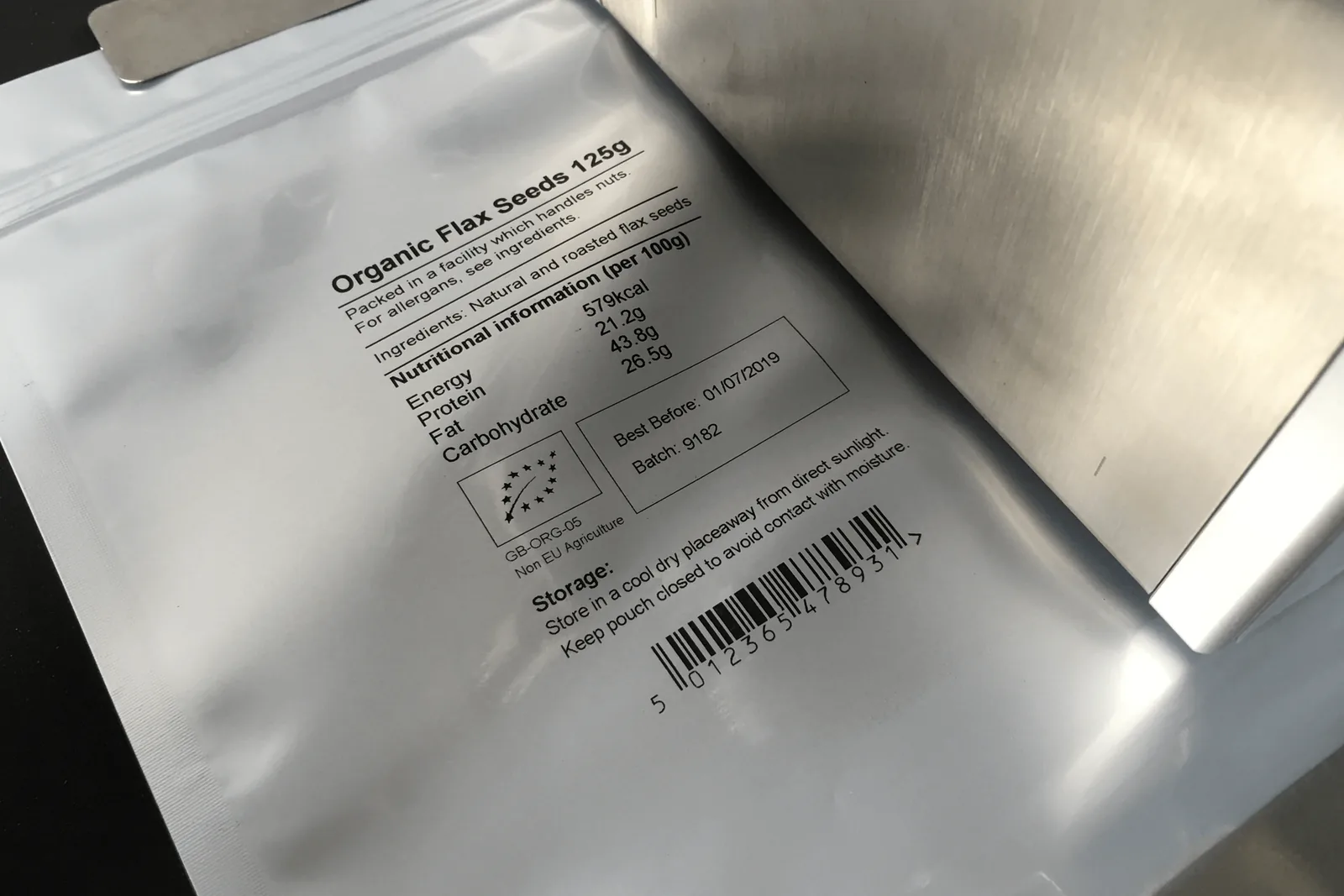
Coding machine sample printing and application trials
Test the complete code on representative production materials and finished packs before technology, ink, ribbon, print position and acceptance criteria are fixed.
A sample trial proves the combination, not a generic printer claim
The same coder can produce a different result when the substrate, coating, surface treatment, temperature, message density, print distance, movement or downstream handling changes. A useful trial therefore records the complete application and tests the code after the pack has experienced the conditions that matter.
Build a representative sample matrix
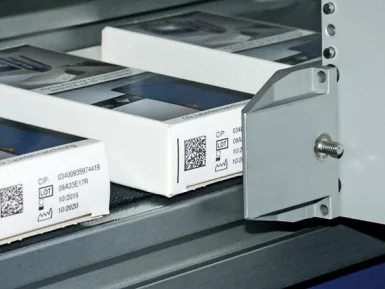
Do not test only the easiest pack. Include the formats and operating conditions most likely to challenge print position, adhesion, contrast or machine-readable quality.
| Sample dimension | What to include | Why it changes the result |
|---|---|---|
| Material and finish | Every production substrate, coating, varnish, treatment and supplier variation that can affect the code area. | Absorbency, surface energy, texture and contamination change ink wetting, ribbon transfer and durability. |
| Pack geometry | Smallest, largest, lightest, least stable and most curved formats, plus the actual print location. | Geometry changes print distance, presentation, tracking, guide contact and camera view. |
| Message | Longest text, largest variable data set, smallest characters, densest barcode and worst-case date or serial format. | Message density affects print time, ribbon use, legibility, barcode module size and available print window. |
| Production state | Normal and limiting line movement, starts, stops, speed changes, warm or cold product and relevant environmental exposure. | The printer must work through the complete production cycle, not only on a static bench sample. |
| Post-print handling | Forming, sealing, guide contact, belts, stacking, chilling, moisture, oil, wiping, abrasion and storage where relevant. | A code that looks correct immediately may fail after the next process or during normal distribution handling. |
Use a written trial sequence
1. Identify each sample
Record material, supplier, pack revision, condition, print area and any treatment or contamination that could affect the result.
2. Print the complete job
Use the real fixed and variable fields, intended dimensions, barcode data, date rules and production orientation rather than a demonstration message.
3. Record machine and consumable
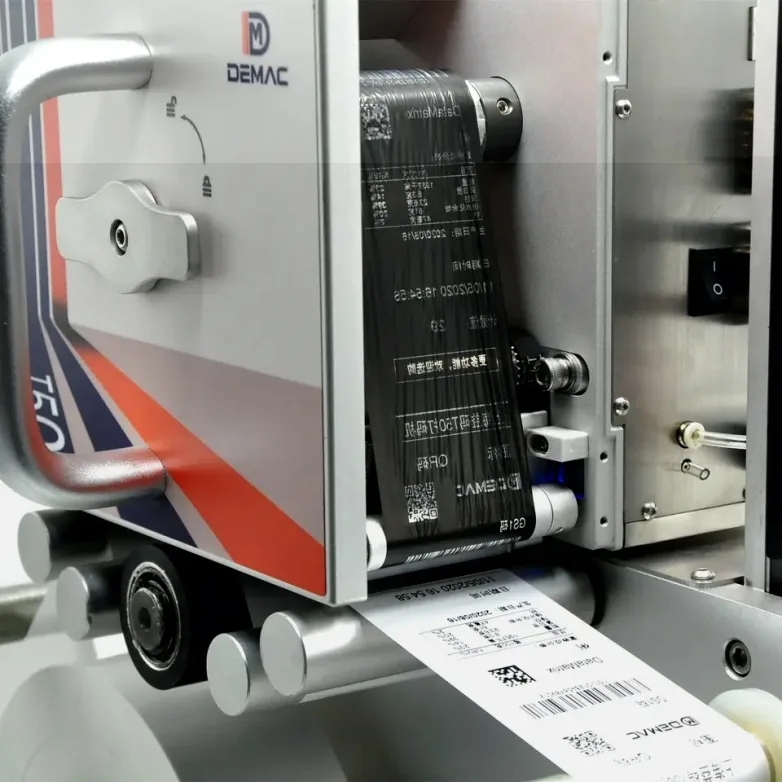
Identify the printer, printhead, ink or ribbon, settings, print distance, speed reference, trigger arrangement and ambient condition.
4. Condition before testing
Agree how long the print should dry or settle and which production or storage exposures must occur before adhesion, rub or scan checks.
5. Test against defined criteria
Use a written method for content, position, contrast, completeness, adhesion, rub resistance, scan or formal verification and finished-pack acceptance.
6. Retain the approved baseline
Keep representative accepted samples, settings, consumable identity, test results and the conditions that define the approved process.
Questions about coding sample trials
Which packaging samples should be sent for coding trials?
Send the actual production material in every relevant finish and format, including the most difficult code area and any supplier variation that changes coating or treatment. Include enough samples to test the complete message, settings and post-print handling rather than producing one favourable display sample.
How many pack variations need testing?
Test every variation that can change material, geometry, movement, print position, code density or handling. Several SKUs can share one approved route only when the team has shown that their relevant variables remain inside the same controlled operating window.
Is a flat print sample enough for approval?
A flat sample is useful for early ink, ribbon and artwork screening, but it does not prove finished-pack performance. Final approval should consider forming, sealing, filling, capping, labelling, conveyor contact, cold or warm product, moisture and any surface contact after printing.
How should an adhesion or rub test be defined?
Define the conditioning time, contact material, force, number of strokes, direction and pass/fail rule before testing. A vague instruction such as “rub the code” cannot be repeated reliably between suppliers, trials or production investigations.
When is barcode scanning not enough?
A successful scan proves that one reader decoded one sample under those conditions. It does not by itself prove symbol quality, data correctness, quiet zones, position, durability or performance across the production range. Formal verification and inline inspection serve different purposes and may both be needed.
What should accompany a sample-trial enquiry?
Provide the pack and material identity, full artwork or data, code dimensions, intended position, line movement, normal and limiting speed, post-print handling, environment and acceptance method. This lets Lancing plan a trial around the production risk rather than only the requested printer name.
Send the real pack and the complete code
Include representative materials, artwork, production movement and the checks that will define an accepted result.