Is line speed alone enough to size a coding machine?
No. Line speed is only one part of coding-machine sizing because the printer must respond to the actual product pitch, available print window, message size, acceleration and movement at the print point. Two lines with the same packs-per-minute figure can create very different print duties if one has tight gaps and the other presents widely spaced products.
Record normal and maximum speed together with pitch, pack length, gap, trigger position and whether the product or web is stationary, intermittent or continuous during printing.
What is the difference between web speed, product speed and print frequency?
Web speed is the linear movement of film through a packaging machine; product speed is the movement of an individual pack past the printhead; print frequency is how often the printer must complete a message. They are related but not interchangeable, and each can become the limiting factor for a different coding technology.
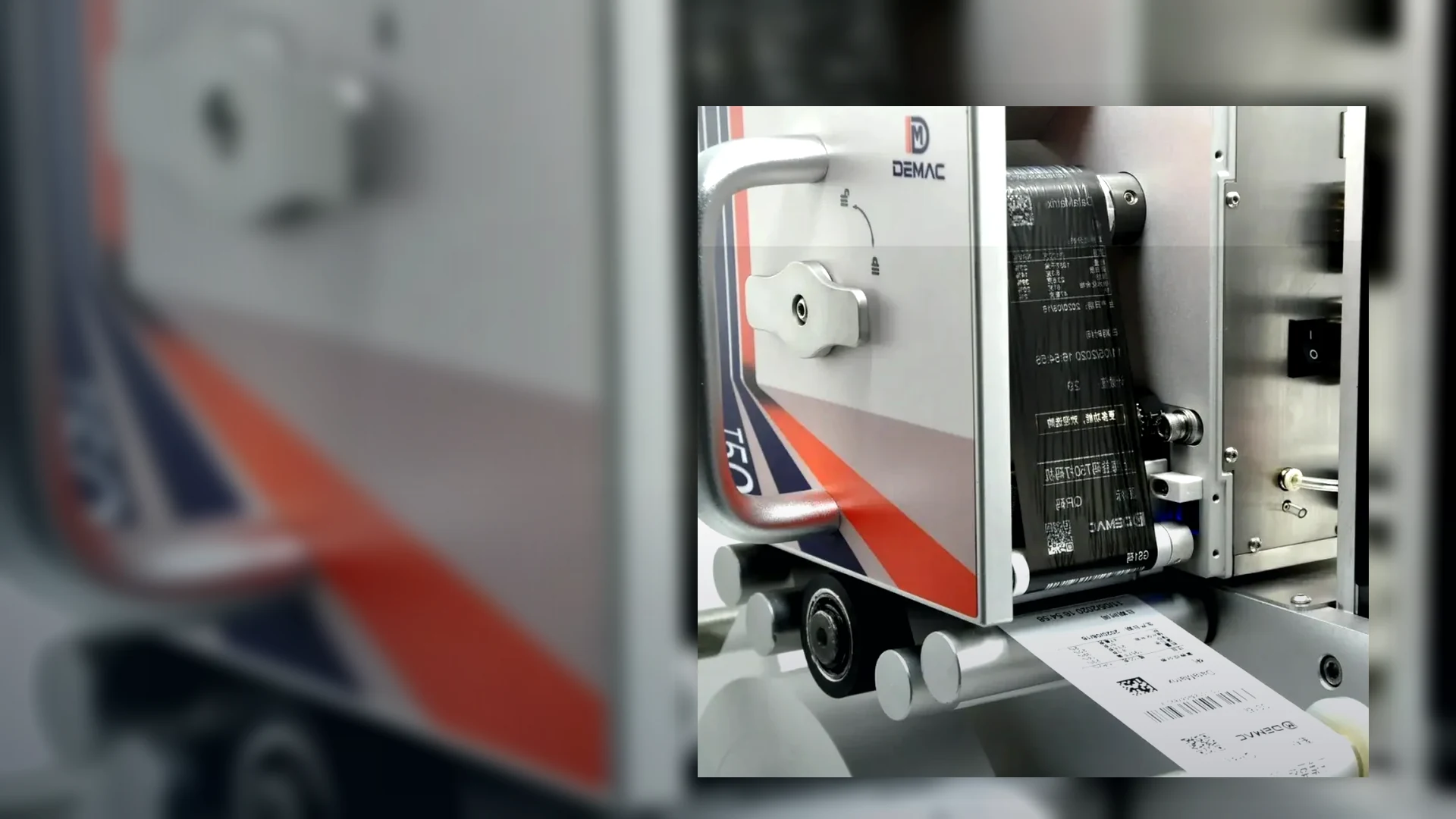
For TTO, include web speed and the registered print window. For product coding, include conveyor speed and product pitch. For intermittent hot foil or TTO, include the stationary dwell available for each print cycle.
How do product pitch and gaps change the required coding duty?
Short pitch and small gaps increase the number of print cycles that must be completed in a given time and reduce the recovery period between products. Irregular gaps can also challenge trigger logic, especially where products bounce, touch or accumulate before the coder.
Provide a representative run video or measured pitch range rather than only an average. The selected sensor and mounting position should be tested with the smallest expected gap and any transparent, reflective or irregular packs.
Can a larger message reduce the available coding output?
A larger or denser message can increase the print time, printed length or data-processing demand, depending on the technology and selected model. The worst-case production job should therefore be used for sizing rather than a short demonstration date.
Include the greatest number of lines, largest characters, logos and any 1D or 2D codes expected in production. If several messages are used, identify the one that creates the longest physical print or highest data load.
How should starts, stops and speed changes be tested?
Starts, stops and speed changes should be tested as controlled production scenarios because they can affect product tracking, trigger delay, encoder response, web registration and the first pack after restart. A steady run at one speed does not prove the coding station will recover correctly.
During FAT or SAT, stop the line at several points, restart at normal and reduced speed, introduce realistic product gaps and confirm that the correct pack receives one complete code in the approved position.
What production data should be supplied for a coding-speed assessment?
Supply normal and maximum output, product or web speed, pack length, pitch or gap range, intermittent dwell, acceleration behaviour, full message artwork, print length, code location and a short video of the coding point. Those inputs allow Lancing to identify the motion and timing that must be proved.
Use the coding-machine URS checklist to record the requirement and the FAT and SAT guide to convert it into acceptance evidence.