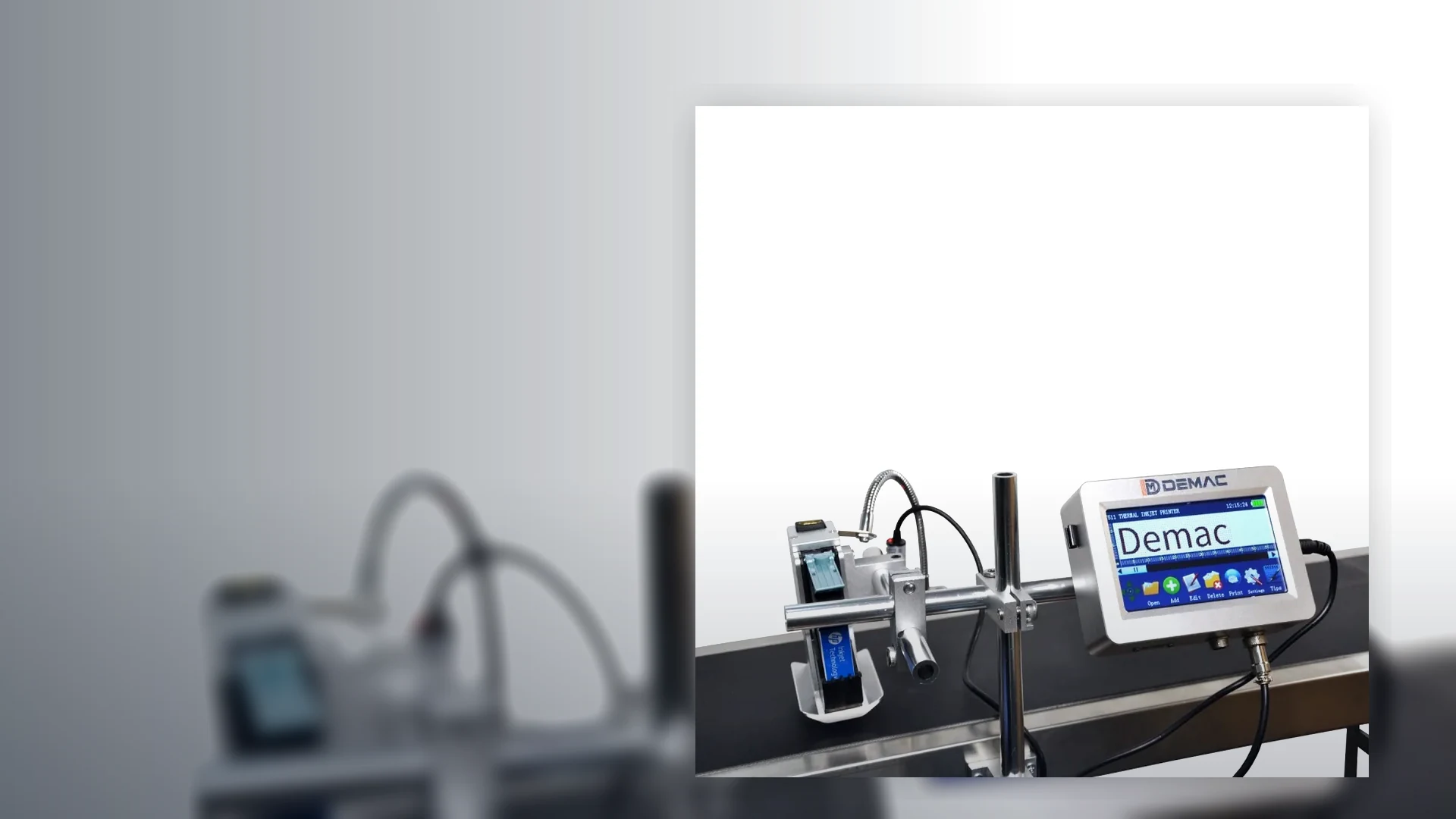
The physical product path determines the timing architecture. A stable carton or bottle on a constant-speed conveyor may need a product sensor and a fixed trigger delay. A variable-speed web or conveyor can require an encoder so the printer follows distance rather than time. The selected printer, host machine and code-position tolerance determine the final method.
Define all signals that are required or available: product present, print trigger, encoder pulses, job loaded, printer ready, warning, fault, low consumable, print complete, inspection result and reject command. Not every model provides every signal, so the final I/O schedule must be checked against the selected equipment.
For data, identify the source of product code, date, batch, serial number, barcode and 2D fields. A USB file, serial connection or TCP/IP socket is not a complete specification. Record the protocol, field names, format, character set, acknowledgements, update timing and response to invalid or missing data.
ERP or MES integration usually needs an intermediate controls or software layer that manages jobs and communicates with the printer. Confirm who supplies and supports that layer, how users authenticate, how templates are version-controlled and what happens if the business system or network is unavailable.
The operator interface should make the active product and message obvious. Editing rights, job-selection rules and first-off confirmation should reflect the process risk. Automated data transfer reduces repeated typing but does not remove the need to confirm the correct physical material and product are on the line.