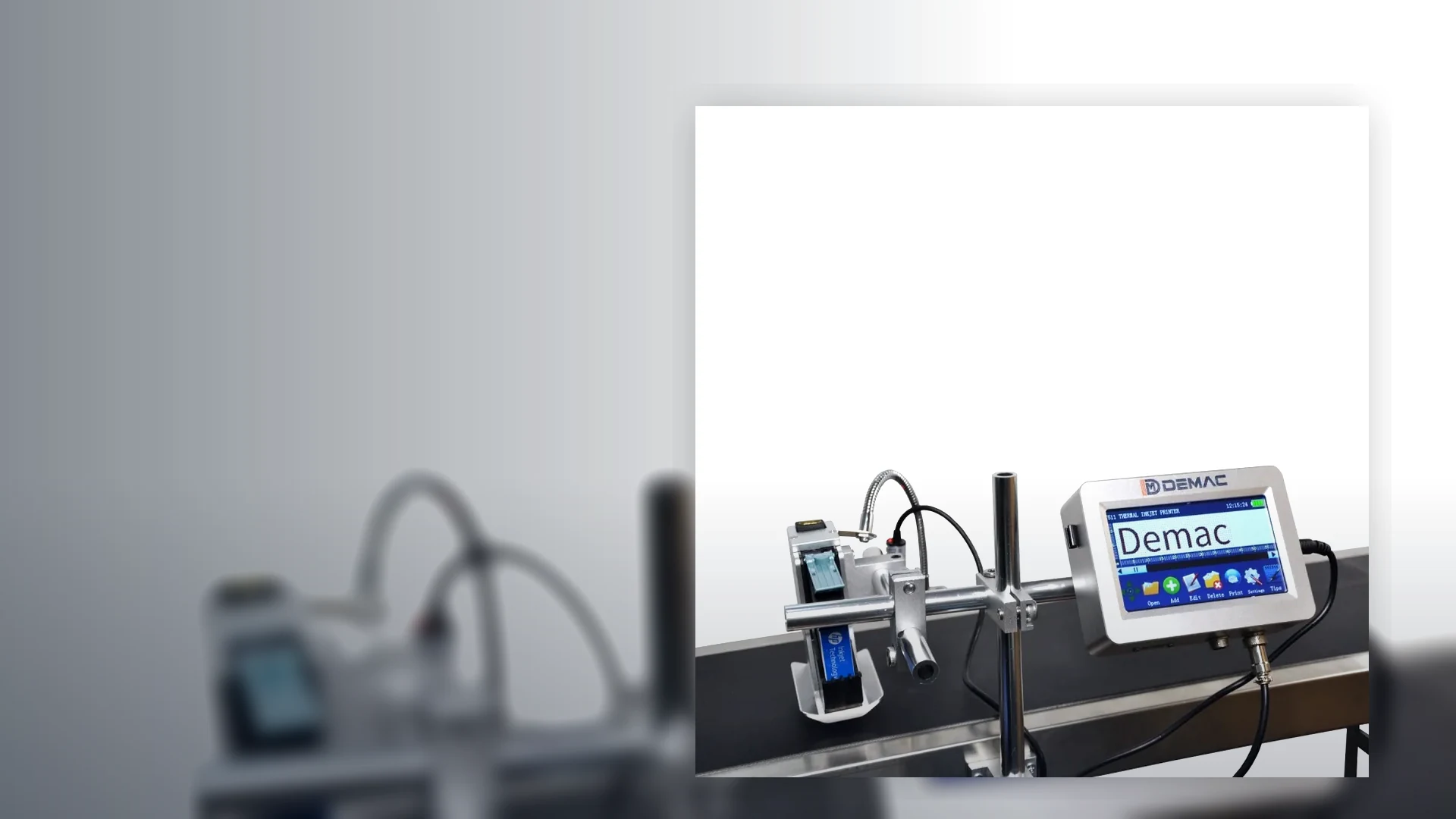
List every field that will be printed and identify its authoritative source. Static product text may come from a controlled template, while batch, date, serial or variable identifiers may come from an operator, PLC, database, ERP or MES. The interface design should state which system creates each value and which system is allowed to change it.
The printer needs a reliable trigger linked to the physical pack. A photoelectric sensor may be sufficient for stable, evenly spaced products. An encoder can be required when the print must follow a variable conveyor or web speed. The final choice depends on the technology, product presentation and accuracy needed at the print point.
Line logic should distinguish printer ready, warning, fault, ribbon or ink condition, job loaded and print complete where those signals are available. Define whether the host machine can run when the coder is not ready and how the operator is told which action is required.
Verification can range from an operator first-off check to a scanner or vision system that confirms presence, position or decoded content. The inspection specification should state what the system can and cannot detect, how lighting and product variation are controlled and what happens after a failure.
A reject device must be proven, not assumed. Test the reject signal, delay, product tracking, full-bin or reject-confirmation logic and behaviour at maximum line speed. If the process uses a line stop or product hold instead, define how affected packs are identified and cleared.
During FAT or SAT, test normal production and faults: wrong or missing job data, lost communication, blocked sensor, speed variation, printer not ready, unreadable code, reject failure and restart after a stop. Record the approved software versions, message templates, interfaces and recovery procedure.